Monday, October 28, 2024

The Devil, the Fiddle, and the Legacy of Charlie Daniels


Charlie Daniels, born on October 28, 1936, in Wilmington, North Carolina, was more than just a country musician. He was a master of multiple instruments and a true Southern music legend whose career spanned decades, leaving a lasting mark on the music world.

Daniels didn't begin with the fiddle; he picked it up at the age of 19, adding it to his repertoire alongside guitar, bass, banjo, and mandolin. However, the fiddle would ultimately become his signature sound, propelling him to new heights in country and Southern rock. By 1967, he had moved to Nashville, the heart of country music, where he rubbed shoulders with big names like Bob Dylan, Leonard Cohen, and Ringo Starr. His versatility made him an incredible session musician, and that fiddle opened doors for him that few could ever imagine.

In the 1970s, Daniels stepped into the spotlight as a Southern rock musician with his own group, The Charlie Daniels Band. They quickly gained fame for live shows that blended country, rock, and blues. Tracks like "The South's Gonna Do It Again" and "Long Haired Country Boy" showcased his talent for mixing genres, and fans loved the unique sound he brought to Southern rock.

Then came "The Devil Went Down to Georgia" in 1979, a song that elevated him to a new level of fame. It became a cultural hit and won him a Grammy. The song's intense fiddle battle and its epic tale of good versus evil made it a classic almost overnight. Audiences couldn’t get enough, and "The Devil Went Down to Georgia" became a song that everyone knew and loved, cementing Daniels' place in music history.

Charlie Daniels' music was not just a soundtrack; it was a celebration of Southern culture and storytelling. Through his songs, he connected listeners to the down-to-earth, gritty charm of the South. Even today, his music endures, cherished by fans of all ages who appreciate his blend of country soul and rock spirit. Daniels' legacy continues to resonate, demonstrating the significant impact one musician can have.

Thursday, October 24, 2024

Sheffield F.C.: The World's Oldest Football Club


Did you know that the world's oldest football club is still active today? Founded on October 24, 1857, Sheffield F.C. isn't just a team; it's where modern football began. Established in Sheffield, England, by two sports enthusiasts, Nathaniel Creswick and William Prest, who were part of the local cricket club, their goal was simple: they loved football. They wanted to create an official, organized sport. Together, they developed a set of rules known as the "Sheffield Rules," which significantly shaped the game we enjoy today.

In the mid-1800s, football wasn’t the structured game it is now. People played various versions of the sport throughout England, but no universal set of rules existed. Creswick and Prest recognized the potential for something more formal and founded Sheffield F.C. to establish a standardized game version. The club played its first official match on December 26, 1860, against another local team, Hallam F.C., marking what many believe to be the first-ever match between two football clubs.

So, what made the Sheffield Rules so important? For starters, they introduced concepts we now take for granted, such as using a crossbar for goals, having corner kicks, and implementing free kicks for fouls. Over time, these rules merged with the guidelines of the Football Association, helping to standardize the sport across the country. The influence of the Sheffield Rules can still be felt in modern football.

Sheffield F.C. is notable for being the oldest club; it symbolizes football's roots and the sport's evolution. Over the years, the club's contributions to football have been recognized globally. In 2004, they received the FIFA Order of Merit, a prestigious award shared with only a few other clubs, including Real Madrid.

Today, Sheffield F.C. is more than just a football team; it represents a living history. The club's home ground, the Coach and Horses Ground in Dronfield, also serves as a football museum. Fans and history enthusiasts come from far and wide to soak in the atmosphere and learn about the sport's origins.

Sheffield F.C.'s story is not just a tale of early football; it's about how a passion for a simple game evolved into the world's most popular sport. Sheffield F.C. remains a cornerstone of football history, from a couple of sportsmen dreaming up rules in 1857 to the billions of fans who now tune in to matches. It demonstrates how even the oldest clubs can continue to inspire, innovate, and play the beautiful game. 

Sunday, October 20, 2024

For Whom the Bell Tolls": Hemingway’s Timeless Tale of War and Humanity


Ernest Hemingway's "For Whom the Bell Tolls" was published on October 21, 1940. It's a novel that delves into war, love, and the human condition. The story is set during the Spanish Civil War and follows the character Robert Jordan, an American dynamite working with a group of Republican guerrillas. Hemingway's experiences as a journalist covering the war heavily influenced the creation of the story, capturing the reality of battle and the sacrifices it demands.

The novel is rooted in Hemingway's time reporting from the front lines of the Spanish Civil War between 1936 and 1939, where he witnessed brutality and the resilience of those fighting against fascism. He channeled these experiences into his writing, creating a character in Robert Jordan who reflects the courage and doubts of real-life volunteers.

Hemingway began writing the novel in 1939 while in Cuba, aiming to capture the war’s complexities. He moved away from his earlier minimalist style, choosing richer dialogue and an emotionally charged narrative that delved into the minds of his characters. The book was infused with Spanish idioms and cultural references, bringing authenticity to the story and immersing readers in the world of the guerrillas.

Upon its release, "For Whom the Bell Tolls" quickly became a bestseller, with critics praising the novel for its realism and emotional depth. Its anti-fascist stance resonated with readers as the world was on the brink of World War II, giving the story an urgent relevance.

The themes of sacrifice and interconnectedness are central to the novel. The title, inspired by John Donne’s meditation "No man is an island," underscores the idea that we are all interconnected. Through Robert Jordan's struggle to complete a dangerous mission and his intense romance with María, the novel explores the tension between personal desires and greater responsibilities.

The novel's impact extended beyond the page. In 1943, Gary Cooper and Ingrid Bergman starred in a film adaptation. Over the years, the book has continued to inspire artists, writers, and musicians, keeping its themes alive in popular culture.

Decades later, "For Whom the Bell Tolls" remains a staple in American literature, studied for its historical context and timeless examination of human nature. It challenges readers to think about what they value and how far they’re willing to go for it, offering insight and empathy across generations.

The Tragic Crash of Lynyrd Skynyrd: A Somber Reflection


You


On October 20, 1977, the world of rock music was forever altered by a tragic event that claimed the lives of six individuals, including three members of the iconic band Lynyrd Skynyrd. The Convair CV-240 aircraft carrying the band and their entourage crashed in a dense woodland area near Gillsburg, Mississippi, leaving a lasting impact on the music community and fans worldwide.

The Fateful Flight

Lynyrd Skynyrd, known for their Southern rock anthems and electrifying performances, was on tour promoting their fifth studio album, "Street Survivors." The band had just performed a concert in Greenville, South Carolina, and was en route to Baton Rouge, Louisiana, for their next show. The Convair CV-240, a twin-engine propeller-driven aircraft, was chosen for its convenience and ability to accommodate the band's schedule.

As the plane approached its destination, it became evident that something was terribly wrong. The aircraft ran out of fuel, and the pilots attempted an emergency landing. Despite their best efforts, the plane crashed into a heavily wooded area, breaking apart on impact.

The Aftermath

The crash claimed the lives of lead vocalist Ronnie Van Zant, guitarist Steve Gaines, backup singer Cassie Gaines, assistant road manager Dean Kilpatrick, pilot Walter McCreary, and co-pilot William Gray. The surviving members of the band and crew were left with severe injuries, both physical and emotional. The tragedy sent shockwaves through the music world as fans and fellow musicians mourned the loss of such talented individuals.

A Legacy Remembered

In the wake of the crash, Lynyrd Skynyrd's music took on a new, poignant significance. The band's songs, which had always resonated with themes of resilience and Southern pride, now carried an added layer of sorrow and remembrance. The album "Street Survivors," released just days before the crash, featured hauntingly prophetic cover art depicting the band members surrounded by flames. Out of respect for the deceased, the cover was later changed.

Despite the immense loss, Lynyrd Skynyrd's legacy endured. In 1987, ten years after the crash, the band reformed with Ronnie Van Zant's younger brother, Johnny Van Zant, taking on lead vocals. The reformed band continued to honor the memory of their fallen members while creating new music and performing for dedicated fans.

A Somber Reflection

The crash of Lynyrd Skynyrd's plane serves as a somber reminder of the fragility of life and the unpredictable nature of fate. It underscores the profound impact that artists can have on their fans and the enduring power of music to heal and unite. As we remember the lives lost on that tragic day, we also celebrate the indelible mark that Lynyrd Skynyrd left on the world of rock music.

In the words of Ronnie Van Zant, "If I leave here tomorrow, would you still remember me?" The answer, undoubtedly, is yes. The legacy of Lynyrd Skynyrd lives on, a testament to their talent, spirit, and the enduring power of their music. 

Wednesday, October 16, 2024

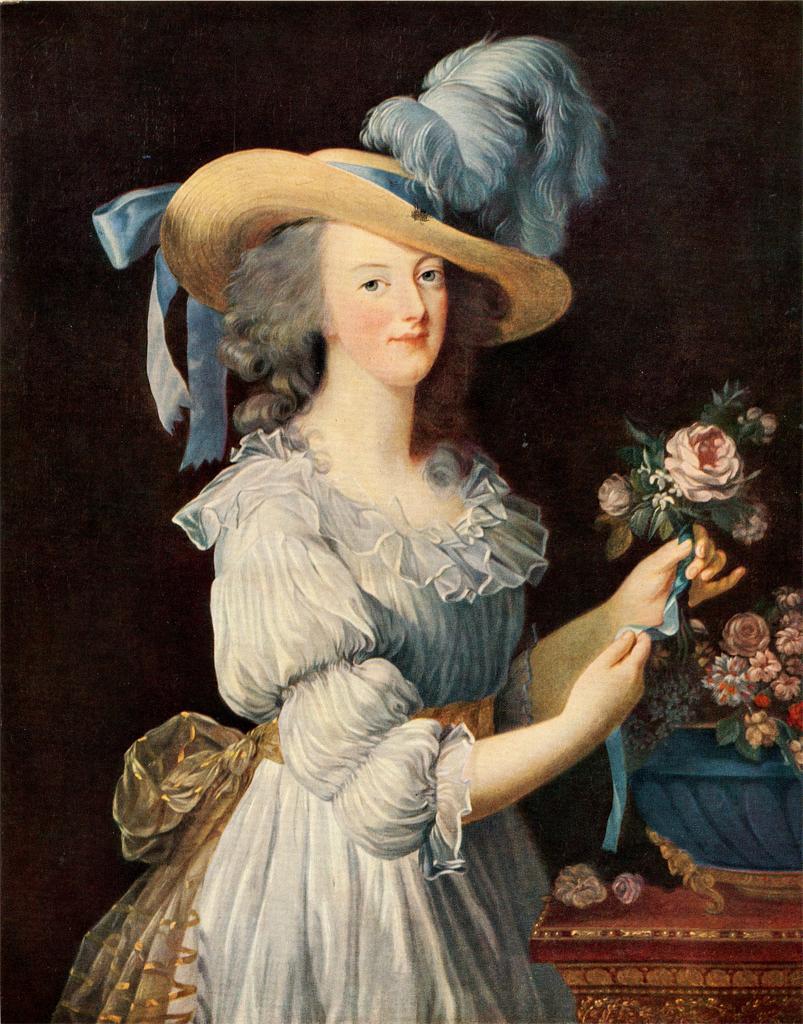
Marie Antoinette’s Last Stand: Dignity in the Shadow of the Guillotine


Marie Antoinette’s final days were a haunting mix of dignity and despair. Once the queen of France, she now found herself in a cold, dim prison cell, awaiting the end of her life. Her husband, Louis XVI, had already been executed months earlier, and the tide of the French Revolution had turned against her with a vengeance.

Imprisoned in the Conciergerie, a notorious jail known as the “antechamber of death,” Marie Antoinette was physically and emotionally broken. Her once-lavish lifestyle, with its extravagant dresses and glittering court at Versailles, seemed like a distant memory. She had lost her beloved husband, was separated from her children, and faced constant harassment. Most cruelly, her son, Louis XVII, was placed under the care of revolutionaries who mistreated and brainwashed him into turning against his own mother.

The queen’s trial, held in October 1793, was a foregone conclusion. The Revolutionary Tribunal accused her of treason and other grotesque charges, including incest with her son, a claim so outlandish that it shocked even some of her harshest critics. Despite her weak health, she defended herself with remarkable poise, but it was useless. She was sentenced to death.

The morning of her execution, October 16, 1793, Marie Antoinette was dressed in a simple white dress, a far cry from the opulence she once represented. She was taken by cart through the streets of Paris, the city that had once celebrated her arrival as a young queen. Now, it was filled with jeering crowds reveling in her fall. As she mounted the guillotine, she accidentally stepped on the foot of her executioner and uttered her final words: “Pardon me, sir, I didn’t mean to.”

At noon, the blade fell, ending the life of one of history’s most infamous and misunderstood figures. Her death marked the end of an era as the French monarchy crumbled alongside the woman who had once symbolized its grandeur and excess. However, her story continues to captivate the world, a tragic tale of a queen brought low by revolution and fate.

Monday, October 14, 2024

George Eastman: The Man Who Made Photography Easy for Everyone


On October 14, 1884, George Eastman, the man who would later found Kodak, revolutionized photography with his invention of paper-strip photographic film. This breakthrough not only made photography easier, but it also transformed it from a challenging and expensive hobby into something accessible to everyone. Eastman can be credited with making it possible for us to capture life's moments with the ease we now take for granted.

A Rough Start with Big Dreams

Eastman was born on July 12, 1854, in Waterville, New York. His early years weren’t exactly smooth sailing, so he dropped out of high school and faced some tough financial times. But Eastman had something else going for him: grit and a curious mind. In 1877, he got his first camera, but instead of being thrilled, he was annoyed. Taking photos back then was no easy feat. The camera was bulky, and you had to lug around a portable darkroom. Yes, a darkroom, because photographers had to coat glass plates with chemicals before taking a single shot. It was tedious and messy, and Eastman, being the problem-solver he was, thought, "There’s got to be a better way."

The Big Idea: Photographic Film

Eastman’s first step in simplifying photography came when he invented a dry plate emulsion. Before that, photographers had to do their chemical work on the spot, right before taking a picture. His dry plate made the whole process easier. But Eastman didn’t stop there; his real game-changer was developing photographic film. On October 14, 1884, he got a patent for paper-strip photographic film. While this early version wasn’t perfect, it was a big leap forward. It paved the way for flexible, transparent film—the kind that really kicked off the modern photography revolution.

The Kodak Camera: Photography for Everyone

Eastman’s real stroke of genius came in 1888 with the release of the first Kodak camera. Forget the cumbersome glass plates; this camera used film that came in a roll! Even better, it was super easy to use. Kodak’s slogan at the time was, “You press the button, we do the rest,” and they meant it. Anyone could pick up a camera, take pictures, and then send the film back to Kodak for processing. It was the first time photography felt accessible to regular people, not just professionals. The Kodak camera was a massive hit, and suddenly everyone was a photographer.

A Legacy Beyond Photos

Eastman’s impact went far beyond cameras and film. He was also a huge philanthropist, donating millions to schools, universities, and hospitals. Today, the George Eastman Museum keeps his memory alive, with a vast collection of photos and film-related artifacts.

Eastman’s innovations didn’t just make photography more accessible. They made it an everyday part of life. From selfies to family albums, we owe a lot to this man who just wanted to make taking pictures a little simpler. His vision inspires anyone who picks up a camera, whether pros or just someone trying to capture a special moment.

Thanks to George Eastman, you don’t need a portable darkroom anymore.

Sunday, October 13, 2024

Rudolf Virchow: The Doctor Who Changed Medicine and Fought for Public Health


Rudolf Virchow, born on October 13, 1821, in the quaint town of Schivelbein, Prussia (now Świdwin, Poland), was one of those rare figures who could move seamlessly between science, medicine, and politics—and make a difference in all of them! Known as the "Father of Modern Pathology," Virchow didn’t just dabble in medicine; he transformed it, and his work still resonates in hospitals and labs today.

Early Days and Education

Virchow’s journey into the world of medicine began at Friedrich Wilhelm University in Berlin, where he earned his medical degree in 1843. From the start, it was clear he had a brilliant mind. He wasn’t content to just follow the rules of the day; he wanted to understand diseases at their core, and he had the vision and curiosity to see beyond the surface.

Cellular Pathology: A Revolution in Medicine

Virchow’s biggest contribution was his theory of cellular pathology, and boy, did that change everything! Before Virchow, people thought diseases affected organs or entire tissues. But Virchow flipped the script by arguing that it all starts in the cells. If a cell malfunctions, it could lead to disease, and that insight revolutionized how doctors understood, diagnosed, and treated illnesses. It’s no exaggeration to say that modern medicine, especially pathology, stands on the shoulders of this breakthrough.

Medical Discoveries That Shaped the Future

Virchow wasn’t done yet. His career was packed with discoveries. He was the first to recognize leukemia as a blood disorder and made huge strides in understanding nerve fibers, particularly myelin, the protective layer around them. He studied all kinds of diseases: syphilis, tuberculosis, rickets, you name it. Virchow didn’t just work in his lab; he was driven to push medicine into a new scientific era, far away from the guesswork that had dominated before.

A Champion for Public Health

But what really sets Virchow apart is that he didn’t stop at the science. He knew that if you really want to make an impact, you’ve got to look beyond the microscope. Virchow was a passionate advocate for public health and social medicine. He famously said, “Medicine is a social science, and politics is nothing more than medicine on a grand scale.” To him, health wasn’t just about treating individuals; it was about improving society.

He believed that poor living conditions, poverty, and lack of education were at the root of many diseases, and he wasn’t afraid to get political to make things better.

Virchow the Politician: Health for All

Virchow’s convictions took him straight into politics, where he fought for real change. He was elected to the Prussian National Assembly in 1861 and later to the German Reichstag. There, he pushed for better public health systems, sanitation, clean water, and education for all. He was relentless in his efforts to improve the lives of the poor because he knew that a healthier society would be a stronger one.

A Legacy That Still Inspires

Rudolf Virchow’s legacy is truly something to admire. He wasn’t just a scientist, doctor, or politician; he was all these and more. His work in cellular pathology changed the way we look at disease, and his dedication to public health transformed how we think about medicine’s role in society. Even today, his ideas are foundational to how we approach both individual and public health.

Virchow showed that science isn’t just about what happens in the lab. It’s about making the world better for everyone. His passion, brilliance, and drive to bring positive change to society still inspire us today. What a life, and what a lasting impact!

Friday, October 11, 2024

Samuel Morse: The Artist Who Sparked the Electronic Revolution


Samuel Finley Breese Morse, born on a crisp spring day in 1791 in the historic town of Charlestown, Massachusetts, embarked on a journey that would forever change the world. Known today primarily for his pioneering work in telecommunication, Morse's early life painted a different picture quite literally. As a gifted portrait artist, his brushstrokes captured the essence of America’s emerging identity. Yet, beneath his artistic pursuits, he stirred a curious mind destined to connect the world in ways previously imagined only in the realms of fantasy.

Educated at Yale College, Morse’s academic career was an eclectic blend of art and science. It was here, among the philosophical and scientific debates, that he first encountered the electrical experiments that would later spark his greatest achievements. But Morse's true calling emerged after a fateful sea voyage in 1832 from Europe to America. Conversations on board about the recent advancements in electromagnetism ignited his imagination. What if news could travel through the air, he wondered, as swiftly as a thought?
With a vision as vivid as his paintings, Morse set to work. By 1837, he had created a prototype of the electric telegraph a device that could send messages over wires using pulses of electrical current. His invention was not just a machine but a herald of the future. Faced with financial hurdles and skeptical peers, Morse's resolve only deepened. The next seven years saw him tirelessly refining his invention, often amidst financial strain and personal sacrifices.
Integral to his telegraph was the Morse code, a simple yet ingenious system of dots and dashes. This code, developed with the help of his assistant Alfred Vail, transformed human thought into a language that electricity could carry across vast distances. Morse’s code was more than just a technical achievement; it was a new language poised to shrink the world.
On May 24, 1844, Morse connected Washington, D.C., to Baltimore with a single wire and sent a message that would echo through history: "What hath God wrought." This biblical verse, selected by Morse’s young friend Annie Ellsworth, marked the first communication via telegraph and symbolized the dawn of a new era. The public's amazement was palpable; news that once took weeks to travel now took mere moments. America was alight with the potential of instant communication.
The telegraph's success spurred a revolution as profound as the Industrial Revolution. It redefined commerce, journalism, and personal communication. Across continents and seas, the telegraph connected the corners of the Earth, making Morse not just an inventor but a global connector.
Despite numerous patent battles and competitors, Morse’s later years were marked by honors and accolades, a testament to a man who revolutionized our interactions. He died in 1872, but the world he helped create was only beginning to realize his vision's full potential.
Morse’s story is not merely one of invention but of perseverance and passion. It reminds us that the power to change the world often lies within a single spark of imagination. As we celebrate his legacy, we remember Samuel Morse as an inventor and an artist whose canvas became the fabric of modern society. His life, a vibrant tapestry of art and innovation, inspires and reminds us of the joy of creation and connection.

Wednesday, October 09, 2024

Nicolaes Tulp: The Man Behind the Anatomy Lesson


Nicolaes Tulp, born Claes Pieterszoon on October 9, 1593, in Amsterdam, is a name that resonates with both the medical world and the political history of the Netherlands. He was much more than just a doctor—Tulp was a surgeon, a civic leader, and a key figure in 17th-century Amsterdam. His influence, both in medicine and public service, has endured long after his death in 1674.

A Medical Trailblazer

Tulp's journey in medicine began at the University of Leiden, where he studied from 1611 to 1614. After completing his studies, he returned to Amsterdam and quickly became a highly respected physician and surgeon. His knowledge and skills in medicine were so well-regarded that he eventually became the city’s official anatomist. This role allowed him to conduct public anatomy lessons, which were a major event back in the day, drawing in the city’s elite, curious about the human body and medical advancements.

One of Tulp's most iconic moments came in 1632 when Rembrandt, the renowned Dutch artist, painted "The Anatomy Lesson of Dr. Nicolaes Tulp." This masterpiece shows Tulp performing a dissection in front of an audience, perfectly capturing his role as both a medical expert and an educator. The painting immortalized Tulp, presenting him not just as a skilled doctor but as a key figure in the advancement of medical knowledge.

A Man of the People

But Tulp wasn’t just about medicine. He was deeply involved in Amsterdam’s civic life and held the position of mayor several times throughout his career. Known for his integrity and commitment to the public good, Tulp used his influence to drive social reforms and improve healthcare in the city. His leadership was marked by a genuine desire to make life better for the people of Amsterdam.

A Lasting Legacy

Nicolaes Tulp’s contributions to both medicine and public service left an undeniable mark on Amsterdam’s history. He’s remembered today not only for his role in Rembrandt’s famous painting but also as a pioneering figure who shaped the fields of anatomy and healthcare. His ability to balance being a leading anatomist while serving as a conscientious public official is what makes his story so fascinating. Tulp stands as a testament to how one person can make a lasting impact in multiple areas of society, blending the worlds of science and civic responsibility to leave a legacy that’s still celebrated today.

Monday, October 07, 2024

How Ford's Moving Assembly Line Revolutionized Manufacturing


On October 7, 1913, the Ford Motor Company introduced an innovation that would forever change the landscape of manufacturing: the moving assembly line. This development didn’t just transform Ford’s production process—it reshaped industries worldwide and set the stage for the modern era of mass production.

Before the moving assembly line, building a car was a labor-intensive and time-consuming process. Every vehicle required skilled workers to perform a variety of tasks, and completing a single car could take more than 12 hours. This made cars expensive, keeping them out of reach for most people. Henry Ford, known for his vision of making cars affordable to the masses, realized that something needed to change if automobiles were to become an everyday commodity.

Ford and his team didn’t invent the concept of the assembly line from scratch. They drew inspiration from other industries that had already implemented continuous flow processes to boost efficiency. One notable example was the meatpacking industry, where workers remained in place as animals moved along a line for processing. Similarly, flour milling relied on mechanized systems to keep production flowing smoothly.

By applying these ideas to car manufacturing, Ford's engineers developed a system where workers performed a single, repetitive task, while the car components moved past them on a conveyor belt. This simple yet brilliant idea allowed for specialization and efficiency, dramatically reducing the time it took to build a car.

The first moving assembly line was put into action at Ford’s Highland Park plant in Michigan. The line was initially used to assemble the Model T, which was already popular as a reliable and affordable car. But the moving assembly line took things to a whole new level.

What once took over 12 hours to assemble was now completed in just about 1 hour and 33 minutes. This improvement was monumental. By speeding up the process, Ford could produce more cars in less time, which meant he could sell them at a lower price. The Model T became even more affordable, and for the first time, the average American could realistically consider owning a car. This democratization of the automobile changed how people lived, worked, and traveled, shaping the growth of cities and the development of infrastructure across the country.

The success of Ford's moving assembly line didn’t just revolutionize the automotive industry—it sent shockwaves through countless other sectors. Manufacturers across various industries took note and began adopting similar processes to streamline their own production methods. The principles of the moving assembly line—specialization, efficiency, and mechanization—became the foundation of mass production worldwide.

Today, we still see the influence of Ford’s innovation in modern manufacturing. While today’s assembly lines benefit from advanced robotics and automation, the core idea remains the same: efficient production through a systematic, organized approach. By breaking down tasks into smaller, more manageable steps and minimizing wasted time, modern industries can produce goods at an incredible scale.

The moving assembly line wasn't just a win for Ford—it was a game-changer for society. By making cars affordable for the average person, Ford helped transform the automobile from a luxury item into an everyday necessity. The assembly line also had a lasting impact on how industries operate, introducing efficiency standards that are still in use today.

Looking back, Ford’s innovation represents one of the most significant moments in industrial history. It was a leap forward not just for car manufacturing but for the broader concept of mass production. As we continue to see advances in technology and automation, the essence of what Ford accomplished in 1913 still drives much of what we produce and how we produce it today.

In short, Ford’s moving assembly line didn’t just build cars—it built the future of manufacturing.

Saturday, October 05, 2024

Larry Fine: The Lovable Stooge Who Kept Us Laughing Through the Tough Times


 Larry Fine, best known for his wild hair and knack for slapstick, was the heart and soul of The Three Stooges—a trio that brought joy and belly laughs to millions. Born Louis Feinberg on October 5, 1902, in Philadelphia, Pennsylvania, Larry's path to comedy was a delightful mix of luck, talent, and a love for making people smile.

In his early years, Larry was actually a talented violinist, and every now and then, he'd show off those musical chops in The Three Stooges’ acts. But it was comedy, not classical music, that truly stole his heart. He found his way to the stage through vaudeville, the variety shows that were all the rage in the early 20th century. Larry performed solo at first, polishing his comedic timing and developing the goofy, lovable style he became famous for.

Then came the twist of fate that changed everything. At a party in the late 1920s, Larry met the Howard brothers, Moe and Shemp. It was a meeting destined to happen. Ted Healy, a well-known vaudeville performer and close friend of Moe’s, saw something special in Larry’s humor—especially in a bit where Larry played the violin. Healy had an idea: he brought Moe, Shemp, and Larry together to form a new comedic act. This was the beginning of something magical. Eventually, Shemp was replaced by Curly, and the classic Three Stooges lineup was born.

The Three Stooges were unlike anything anyone had seen before. Their slapstick comedy—full of physical gags, hilarious wordplay, and spot-on timing—became a hit. Their routines often took the most ordinary situations and turned them into wild, chaotic, laugh-out-loud scenes. People couldn’t get enough of them. At a time when the world was facing tough times like the Great Depression and World War II, The Three Stooges became a much-needed escape. They reminded everyone that even in the hardest moments, laughter is the best medicine.

And in the middle of it all was Larry—his messy hair and his sweet, confused expressions made him impossible not to love. He often played the voice of reason (though, let’s be honest, a pretty flawed one) between Moe’s bossiness and Curly’s childlike silliness. Larry’s role was the glue that held their craziness together, and his charm made him an audience favorite.

Looking back, Larry Fine’s journey—from a kid with a violin in Philly to one of the most beloved comedians in history—is proof that sometimes the most beautiful things in life come from unexpected places. The laughter he helped create with The Three Stooges still echoes through generations, showing us that true, heartwarming comedy never gets old. Larry, with all his lovable quirks, will always be a reminder that humor can lift us up, no matter what life throws our way.

Thursday, October 03, 2024

Lightning in a Bottle: The Life and Legacy of Stevie Ray Vaughan

 Stevie Ray Vaughan was born on October 3, 1954, in Dallas, Texas, and from the start, it seemed like music was destined to be a part of his life. Inspired by his older brother, Jimmie Vaughan, Stevie picked up his first guitar at the age of seven. He didn’t just dabble; he threw himself into it, soaking up the sounds of blues legends like B.B. King and Albert King while also being drawn to the explosive style of Jimi Hendrix. That mix of old-school blues and rock magic would eventually define his sound.

In 1978, Stevie formed the band Double Trouble, and that's when things really started to click. Together, they created a raw, electric sound that was impossible to ignore. Their big breakthrough came with the release of Texas Flood in 1983. The album was like a lightning bolt, showing off Stevie’s jaw-dropping guitar skills and his deep love for the blues. It wasn’t just a hit with blues fans; it caught the attention of the whole music world. Songs like "Pride and Joy" and "Lenny" highlighted both his technical prowess and his emotional depth.

Over the next few years, Vaughan and Double Trouble released albums like Couldn't Stand the Weather (1984) and Soul to Soul (1985), each one solidifying his place as a leading figure in the 1980s blues revival. His music didn’t just bring the blues back to life; it brought it back into the mainstream at a time when it was being overshadowed by other genres. Stevie wasn’t just a guitarist he was a force of nature. His playing was bold and fiery, and his live performances were electrifying. Every time he picked up his guitar, you could feel his passion.

He wasn’t just working in the blues world, either. Stevie’s talent caught the eye of other major artists, and he collaborated with the likes of David Bowie, contributing his guitar wizardry to Bowie’s Let’s Dance album. He also wowed audiences at the 1982 Montreux Jazz Festival, a performance that helped to cement his reputation as a guitar hero.

But tragically, Stevie’s life was cut short in 1990. On August 27, at just 35 years old, he died in a helicopter crash. Even though his career lasted barely a decade, his impact on the music world is immeasurable. His sound continues to influence countless musicians, and his legacy as one of the greatest blues guitarists of all time is undeniable.

Stevie Ray Vaughan wasn’t just a master of the guitar; he was a musician who played with his heart and soul on full display, and that’s why his music still resonates so deeply today.